

Travertine stones

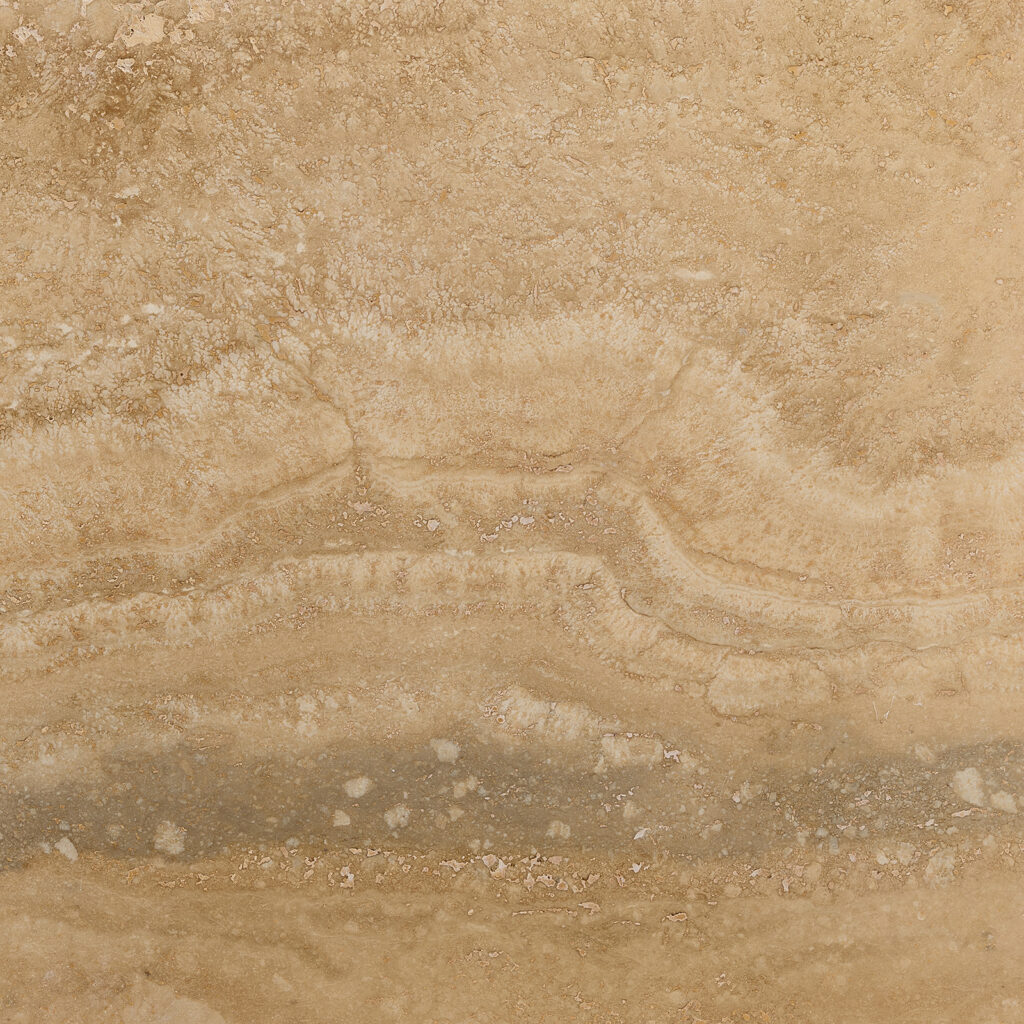
Travertine is a type of sedimentary and decorative stone formed from the deposits of hot springs. The characteristic pores and cavities in travertine are created by gases trapped in the hot water during the deposition process. The fewer dissolved minerals in the source water, the lighter the color of the resulting stone.
The temperature of the water and the elevation of the area also affect the quality of travertine. Iran is home to several major travertine quarries, including the famous Atashkooh (Fire Temple) quarry, as well as quarries in Zanjan, Takab, Ardabil, Markazi province, and Abyaneh.
Appearance of Travertine
Travertine has a porous texture and comes in a wide range of colors, often with distinctive banded or wavy patterns. This color variation and banding result from differences in the chemical compounds present during deposition, which appear as veins or streaks in the stone. Importantly, these veins usually have a different chemical composition than the main body of the stone, making them weaker points that are more vulnerable to impact or pressure. Therefore, the fewer veins and impurities a travertine has, the stronger and more durable it will be.
Most travertines have relatively low abrasion resistance, which makes them easy to cut and process, but they possess good compressive strength (higher than marble but lower than granite). Their high porosity and strength make them particularly suitable for use in wet environments and at height. The minimum and maximum physical requirements for travertine are specified in ASTM C1527 or Iranian National Standard 13247.
Advantages of Travertine
Thanks to its porosity, travertine offers excellent thermal and acoustic insulation properties. The air trapped in its pores also increases its resistance to fire. Travertine has acceptable overall strength and can be cut either with wave (vein-cut) or without wave (cross-cut/fleur-cut). The natural holes and cavities on its surface are typically filled during processing. These pores are actually beneficial during installation: cement mortar penetrates into them, creating a strong natural anchoring effect that helps prevent the stone from detaching.
Compared to many other natural stones, travertine has a relatively low specific weight, which reduces the dead load on a building’s structure. Certain types, especially Abbasabad and Hajiabad travertine, take a very high polish, resulting in a bright, reflective finish. They are also highly suitable for carved and three-dimensional Roman-style facades, as the stone can be easily shaped into various volumes and details.
Applications of Travertine
Due to its very high porosity, travertine is ideal for exterior building facades. The pores allow cement grout to penetrate deeply, acting as a natural mechanical anchor (similar to a built-in “scoop”).
Travertine performs exceptionally well even in very cold, wet, and freeze–thaw climates without the risk of falling off the wall over time. In contrast, marble used on exterior facades tends to lose adhesion with the backing over the years and can detach. This makes travertine one of the safest and most reliable choices for exterior cladding worldwide.